
Feed the Fish, Not the river
Meet the Paddlefish
Paddlefish are one of the Mississippi River’s most recognizable native fish. They depend on healthy rivers and aquatic habitats, as do we.
Our paddlefish sculpture brings the issue of marine debris home to Dubuque and the Mississippi River. The body of the paddlefish contains debris collected during local cleanup efforts, turning trash into a visible record of the problem facing our waterways and oceans.
And there’s one more purpose for the sculpture...
Feed the Fish
The paddlefish’s mouth doubles as a trash receptacle.
Visitors can help “feed the fish” by putting their own trash where it belongs.
Every piece of litter that goes into the paddlefish is one less piece of trash that could make its way into a storm drain, stream, river, or ultimately the ocean.
Conservation Action
The National Mississippi River Museum & Aquarium is one of seven Aquarium Conservation Partnership member institutions receiving a sub-award through this NOAA-supported initiative (national Oceanic and Atmospheric Administration).
With the paddlefish sculpture, our project brings the message of marine debris to the Mississippi River Watershed through an interactive sculpture and debris receptacle.
The debris incorporated into the body of the fish was found during local watershed cleanups and represents the kinds of human-made materials that can find their way into our waterways.
Plastic doesn't break DOWN, it breaks UP!
The most common material found during trash cleanups was plastic. One of the reasons plastic pollution is such a persistent problem is that plastic doesn't simply disappear when it enters the environment.
Larger pieces of plastic can be weathered and fragmented by sunlight, heat, waves, abrasion, and other environmental processes. Over time, they can break into progressively smaller pieces called microplastics.
That means a plastic bottle, food wrapper, piece of packaging, or other item that enters a waterway today can become much smaller plastic particles over time.
From Creeks to Coast
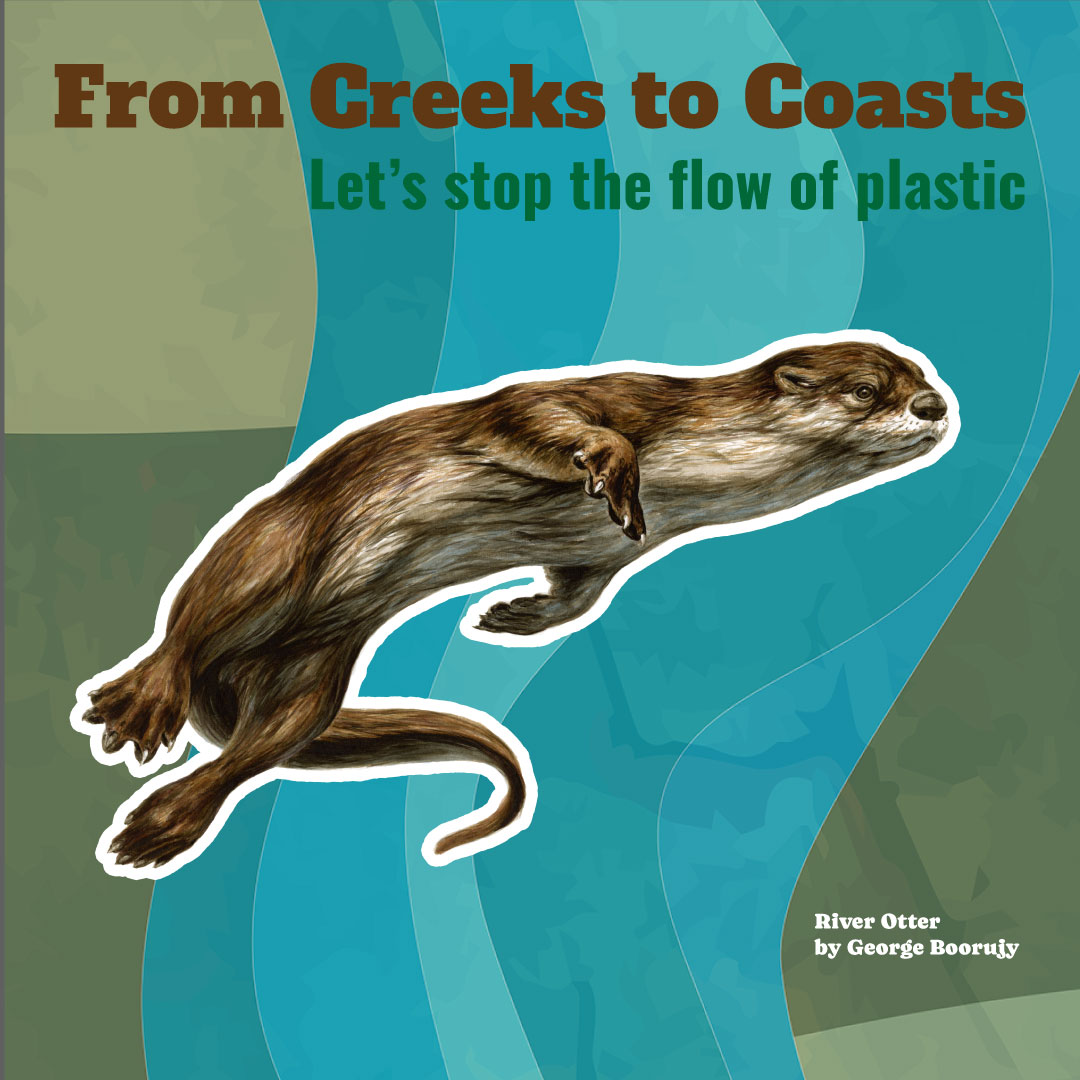
From Creeks to Coasts is a national public engagement campaign led by the Aquarium Conservation Partnership and supported by the National Oceanic and Atmospheric Administration's Marine Debris Program.
The campaign brings aquariums and communities together to reduce plastic pollution before it reaches rivers, lakes, and the ocean.
The National Mississippi River Museum & Aquarium is proud to participate alongside other ACP member institutions across the country. Through this project, we're using conservation, education, and interactive experiences to help visitors understand that marine debris isn't only an ocean problem.
It's a watershed problem—and we all have a role in the solution!
Learn more about the campaign here
Learn more about the Aquarium Conservation Partnership here
Learn more about the NOAA Marine Debris grant program here