

The annual Historic Preservation Awards are given by the Dubuque County Historical Society in partnership with the Dubuque County Historic Preservation Commission.
The awards are announced as part of Dubuque Main Street’s Architecture Days programming. The awards recognize exterior preservation and restoration of properties throughout Dubuque County.
Presented annually since 1975, only the most recent year of awardees is on this page. For information on previous awards, contact info@rivermuseum.org.
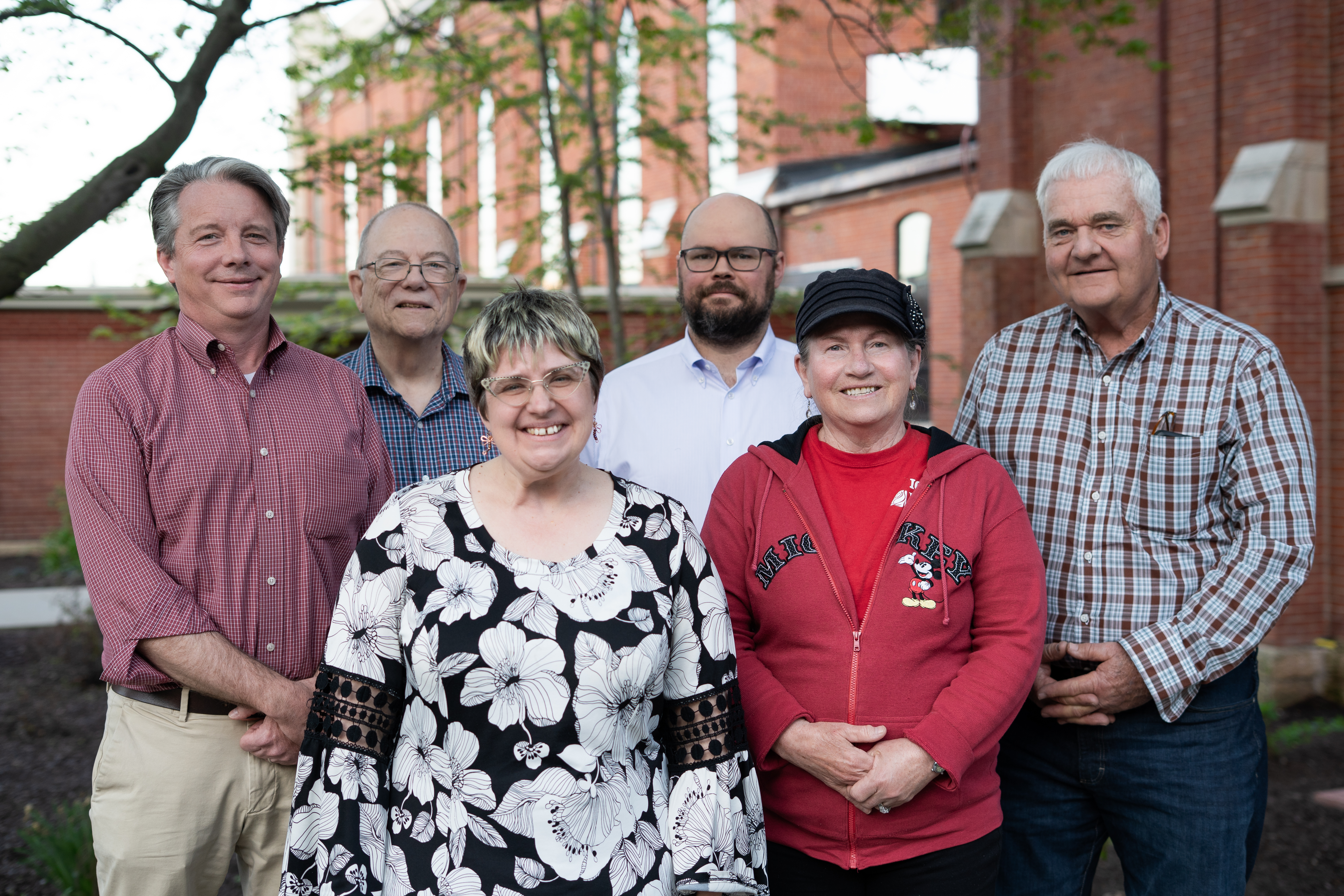
Members of the Historic Preservation Awards Committee (left to right) Jason Neises, Mike Gibson, William (Bill) Doyle, Heather Green, Cinda Welu, Jack Smith Not pictured: Patricia Baum, RRS Stewart, David Vanderah, Emma Sundberg
Eligibility
Eligible historic properties must be located within Dubuque County. Properties should be at least 50 years old and are reviewed on criteria such as exterior construction materials; fenestration (windows); architectural details appropriate to the original design of the building; compatibility of the color scheme; alterations or additions to the structure; and appropriateness of the surrounding grounds to the original design of the building.
Property owners can nominate their own buildings, or nominations can be submitted on behalf of neighbors, friends, and others who have researched and thoughtfully restored historic property.
The winning properties are honored at an awards ceremony as part of Dubuque Main Street’s annual Architecture Days celebration.
Nomination Process
To nominate a property for an award, complete the electronic form below or mail nomination content to the Historic Preservation Awards, Dubuque County Historical Society, 350 E. 3rd St., Dubuque, Iowa 52001. For questions, email info@rivermuseum.org.
The deadline for 2025 award nominations is February 28, 2026.
Nominations after this date will be considered in the following year.
Award Winners
2025
Barbara & Calvin Gatch Farmstead: Dubuque, Iowa
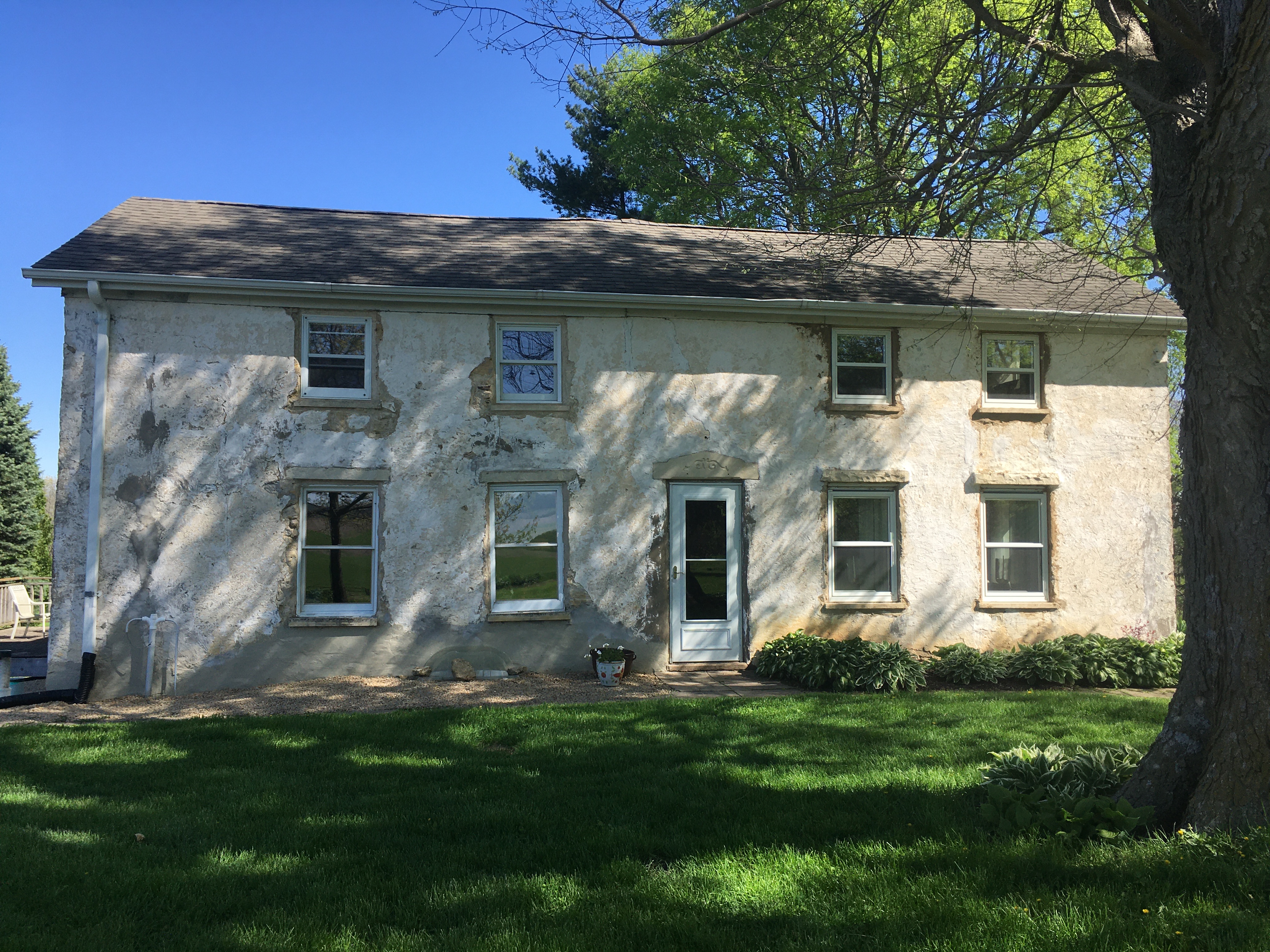
Since 1975, Dubuque County Historical Society honors those individuals and organizations which preserve the architectural heritage of their properties. The awards committee works in conjunction with the City of Dubuque’s Historic Preservation Commission to discover, research, and document these properties. As Historic Preservation Month (May) wraps up, we would like to recognize the four recent awardees of the Dubuque County Historic Preservation Awards. This post recognizes the work of Barbara and Calvin Gatch.
Their property is a farmstead with history tracing back to an original Julien Dubuque land claim in 1788. It is one of the few remaining that represents the Luxembourgian settlement of the mid to late 1800s in this area. As agriculture and rural life changed, these limestone houses, barns, and well-houses became less practical and less frequently built. Since taking ownership in 1973, the Gatches have made additions to the main house, but they have done so with limited impact on the original stonework.
The main house has yielded some surprises, such as finding a rosary amid the stonework while tuckpointing, which the family has since framed in the room it was found. The discovery of the rosary is a hallmark to the strong religious ties Luxembourgians had with the Catholic Church.
Sister of Our Lady of the Mississippi Abbey: Dubuque, Iowa
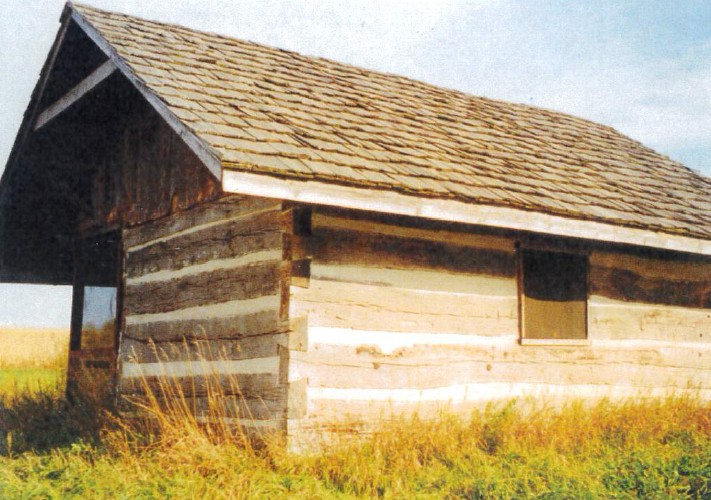
Since 1975, Dubuque County Historical Society honors those individuals and organizations which preserve the architectural heritage of their properties. The awards committee works in conjunction with the City of Dubuque’s Historic Preservation Commission to discover, research, and document these properties. As Historic Preservation Month (May) wraps up, we would like to recognize the four recent awardees of the Dubuque County Historic Preservation Awards. This post recognizes the work of the Sister of Our Lady of the Mississippi Abbey.
Originally, the property the Sisters now manage was settled by various individuals from the first Indigenous Peoples, the Meskwaki or Fox Nation, to the European settlers that pressed West of the Mississippi River. Among those were Joseph and Angelina Mannhart, Swiss immigrants, arrived in Iowa and made their first purchase of land in October 1853 in Mosalem Township. The 1860 census reveals they had 25 acres of tilled ground and another 135 of untilled acreage. This homestead is in a valley toward Masset Road in what is today part of the Our Lady of the Mississippi Abbey property and commonly called the North Farm due to its location from the main house-monastery. The Sisters took ownership in 1964, including all buildings on the property like the log cabin.
The log cabin was story and a half high, but due to being abandoned, had logs that were rotted and unsalvageable. It was reconstructed at a new location by the Abbey farm pond between 1989-1990. This process involved chiseling mortars off the logs, moving it by flat-bed trailer, and placing them on a new foundation to be re-mortared. An over-hanging roof was added for protection.
Ron & Mary Breitbach English Manor Home: Dubuque, Iowa
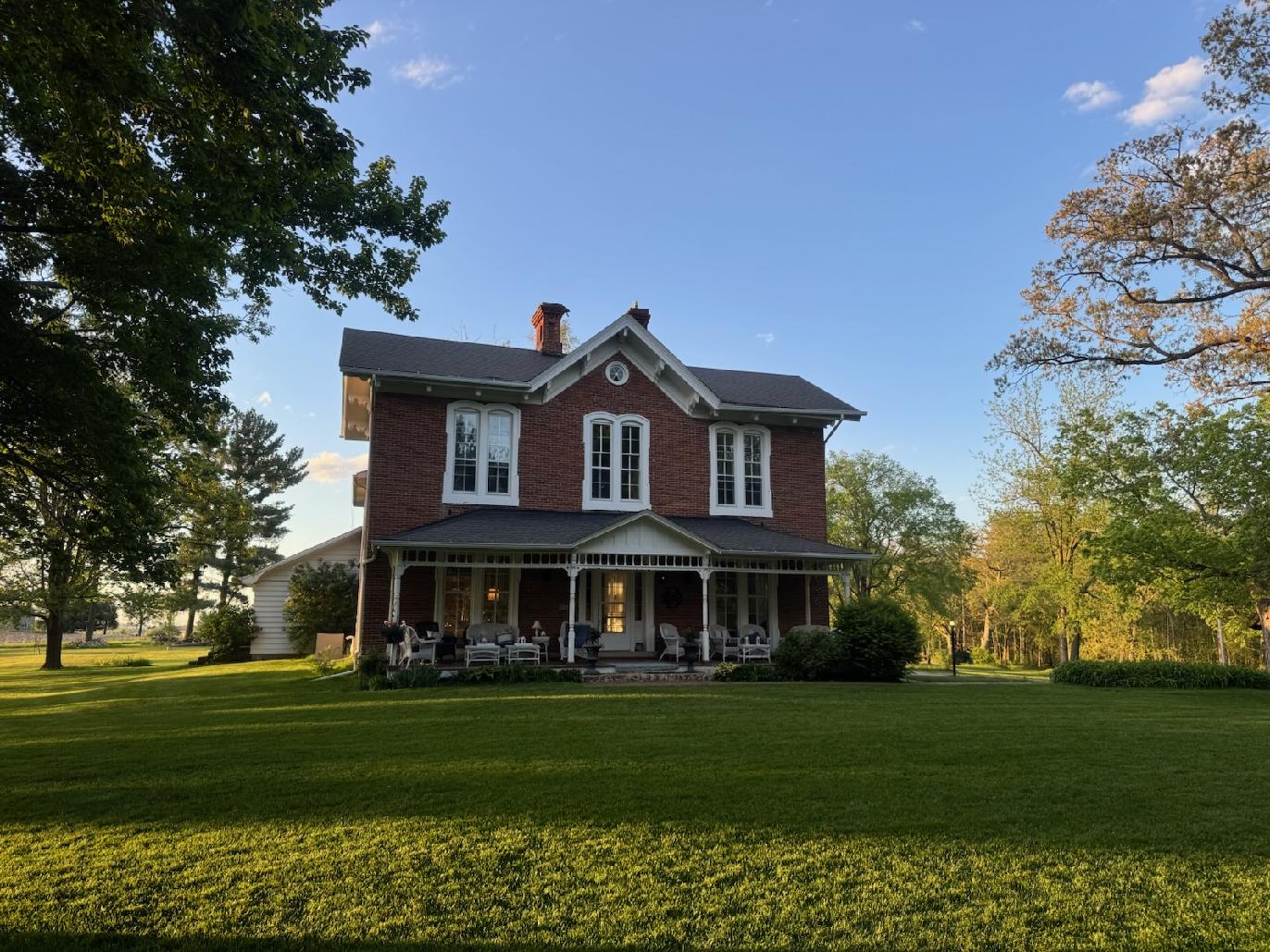
Since 1975, Dubuque County Historical Society honors those individuals and organizations which preserve the architectural heritage of their properties. The awards committee works in conjunction with the City of Dubuque’s Historic Preservation Commission to discover, research, and document these properties. As Historic Preservation Month (May) wraps up, we would like to recognize the four recent awardees of the Dubuque County Historic Preservation Awards. This post recognizes the work of Ron and Mary Breitbach.
Derby Grange, a quintessential English manor-style home built in 1856–1857 by Joseph Herod, stands as a remarkable example of mid-19th-century craftsmanship six miles west of Dubuque. Constructed of triple red brick, the house features eight-foot-tall windows fitted with interior wooden folding shutters, a hallmark of wealthy property owners of that era. It boasts eleven-foot-high ceilings on the first floor and nine-and-a-half-foot ceilings on the second floor. Its most celebrated interior element—the grand marble fireplace in the dining room—has served as the focal point for generations.
Over the past two decades, skilled craftsman and general contractor Joseph G. Mulgrew meticulously restored Derby Grange. His work exposed the original pine floors, modernized the kitchen while preserving historic character, and added custom marble and cabinetry in the dining room to complement the original fireplace.
Jim & Betty Coohey Maurice Brown House: Dubuque, Iowa
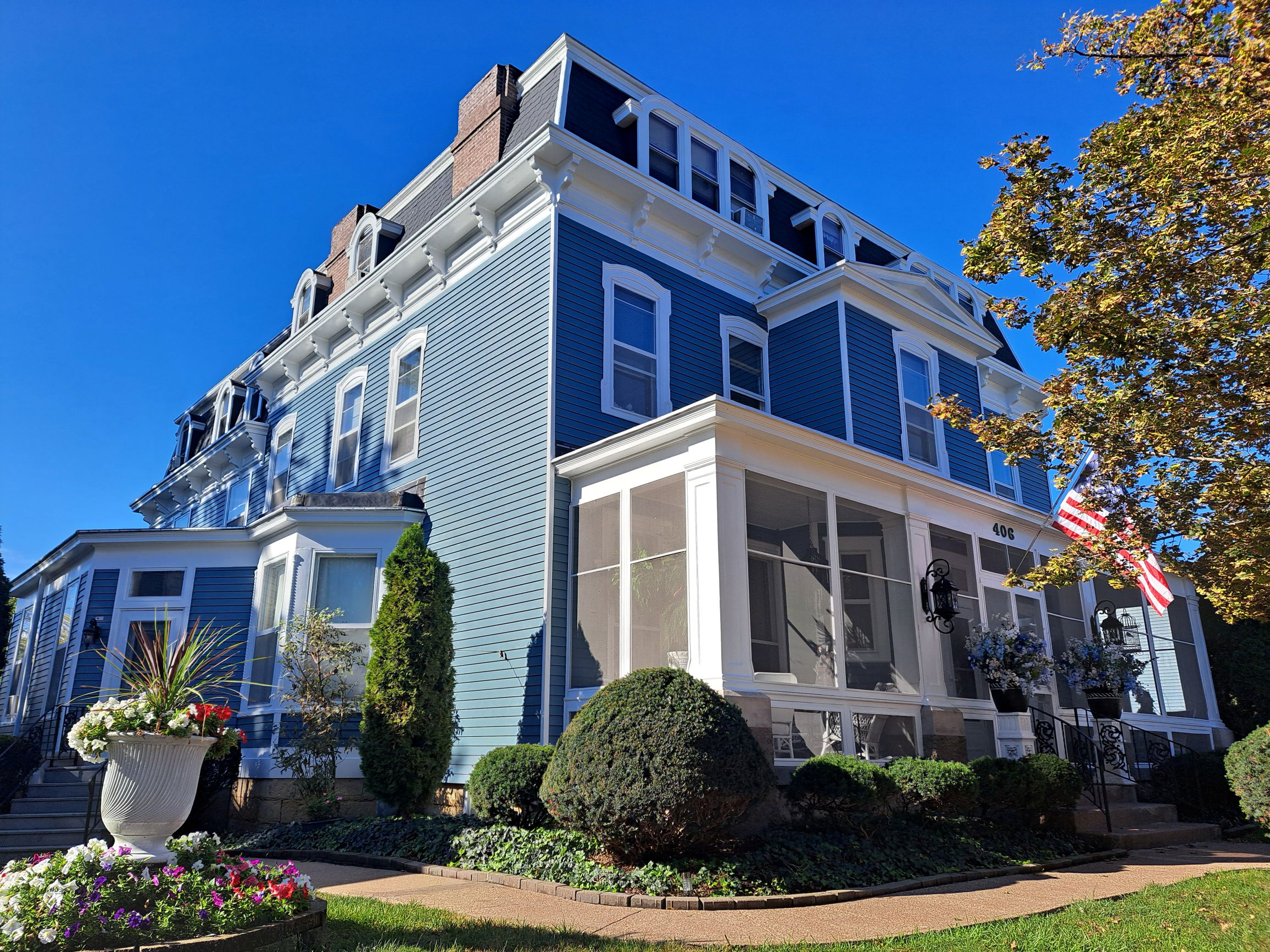
Since 1975, Dubuque County Historical Society honors those individuals and organizations which preserve the architectural heritage of their properties. The awards committee works in conjunction with the City of Dubuque’s Historic Preservation Commission to discover, research, and document these properties. As Historic Preservation Month (May) wraps up, we would like to recognize the four recent awardees of the Dubuque County Historic Preservation Awards. This post recognizes the work of Jim and Betty Coohey.
First noticed by this committee in 1978 we return again as they celebrate a 50-year milestone of stewardship that brings the historic Maurice Brown House into the 21st Century. The Maurice Brown House is one of the contributing structures of the Seminary Hill Historic District which was listed on the National Register of Historic Places in 2015. It is a late Victorian, Second Empire-style, with a two-story pavilion with gable roof. It features a triple-dormer set with round flat-top hoods. The property was converted into four apartments in the 1920s and later owners additionally converted the garage into living spaces as well. It was in this state that the Coohey’s bought the home in 1977.
The Coohey family poured their efforts into preserving the Maurice Brown House, meticulously remodeling the interior, including all apartments, while honoring the home’s rich history. Their commitment to retaining the original woodwork, moldings, hardware, and other key features helped maintain the house’s unique character. They have restored the original Yankee gutters and brackets and did significant repairs in the last year including replacing the asphalt roof and updating the exterior staircases.
Past Awardees
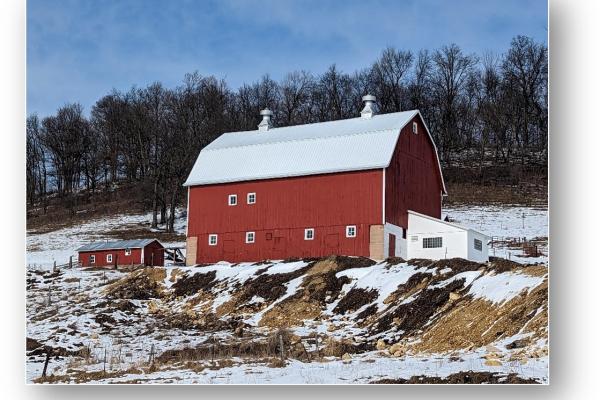
The Lassance Barns
While maps no longer show Millville, the Lassance barns (recognized in 2022) are still there reminding us of this small hamlet once tucked into a valley just north of Epworth. There were once three grist mills along the streams in Millville, two of them on the Lassance farm.
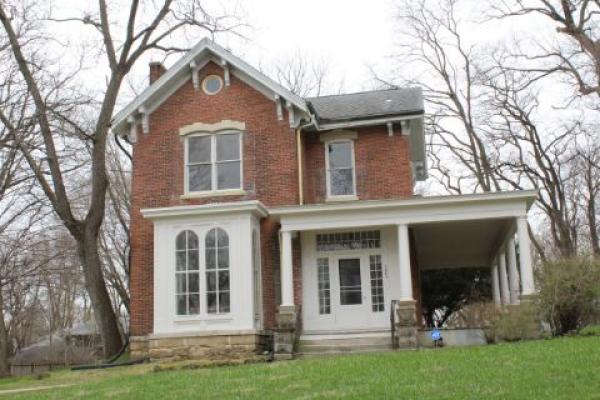
Langworthy House
Langworthy House, built in the late 19th century, was recognized (2021) for maintaining its Italianate character with a wrap-around porch.
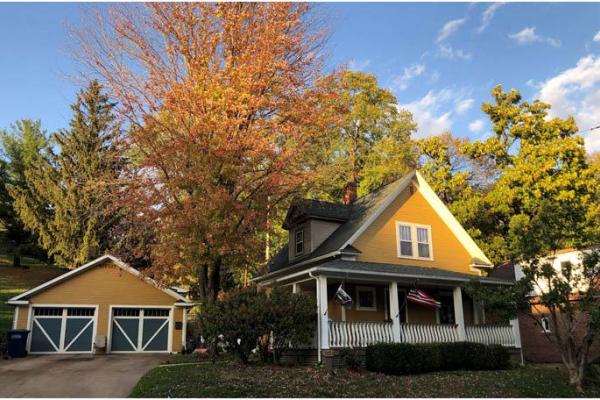
Burley Family Home
Built in 1920 by Renwick J. Luke, this home was recognized (2020) for its repainting and incorporation of solar panels that do not detract from its historic nature.
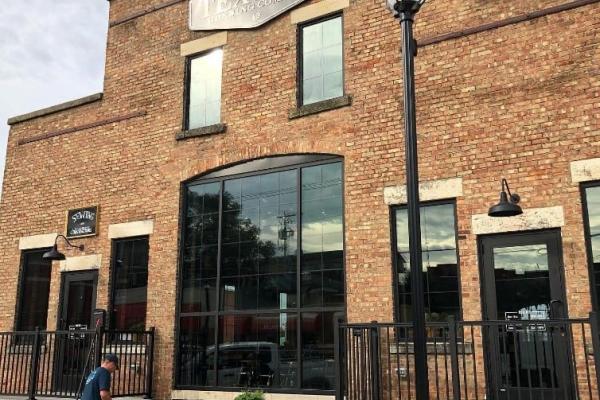
Textile Brewing Company
Built originally in 1906 as the Dyersville Gas Engine Company and later operated as a sewing factory, the building was recognized (2019) for renovations that included replica windows and returning the exterior to its more original form.